Mumbling Over the Masterpiece: In Defense of the Director Who Won't Stop Explaining His Own Movie
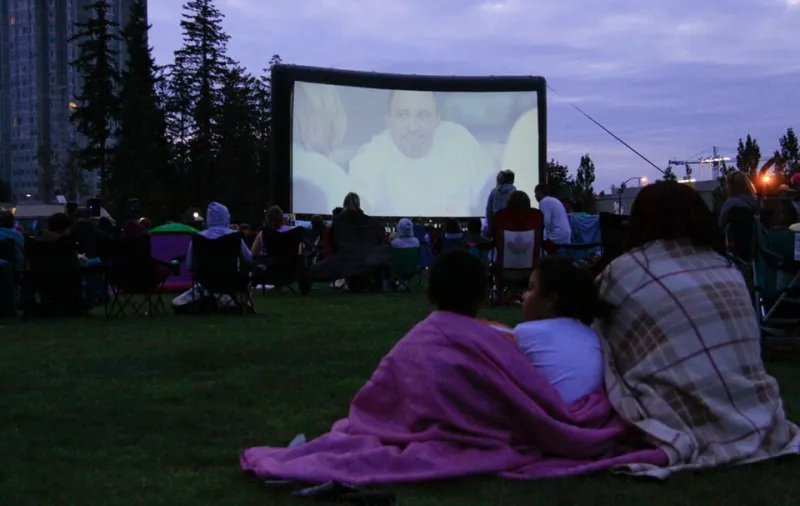
Photo: waferboard, CC BY 2.0, via Wikimedia Commons
There is a specific sound I miss: a director clearing his throat about forty seconds into his own opening scene, then apologizing for the microphone, then settling into a forty-minute ramble that has almost nothing to do with the plot and everything to do with why the kitchen in the second act was painted that particular shade of green.
That sound used to be free with a purchase. You bought the disc, you got the movie, and somewhere in the appendix was a man in a recording booth talking over the thing you just paid to watch. It was the least efficient delivery system for information ever invented, and I loved it.
The Weird Intimacy of a Man Talking Over His Own Movie
A good commentary track is not a documentary about the making of a film. You can get a polished version of that anytime. A commentary is looser and stranger than that. It is a filmmaker sitting alone in a room with a screen and a microphone, occasionally remembering he has an audience.
The result is a kind of accidental friendship. You learn that the actor kept breaking. You learn that the location flooded. You learn that the scene everyone quotes at him at parties was actually shot on the fly in an afternoon and he is visibly, cheerfully tired of hearing about it. I once heard a filmmaker spend six full minutes on the logistics of parking a production van in a certain part of Los Angeles, and I have thought about it for years, which is more than I can say for most scenes I have watched this month.
Commentary rewards the way you watch a movie after the first time. First watch, you follow the story. Second watch, you get bored of the story and start looking at the edges. The commentary is made for exactly that second watch.
Why the Track Went Quiet
Part of it is simple math. Commentary was always free labor attached to a product that used to cost thirty dollars. Streaming killed the reason to put it in the box. There was no box.
Part of it is that creators got careful. A loose, unscripted track is a small liability in an era where a fifteen-second clip of somebody saying the wrong thing travels farther than the movie ever will. Studios would rather post a tidy six-minute featurette than risk ninety minutes of improvisation.
And part of it, I think, is that nobody asked loudly enough. Bonus features on streaming services tend to be buried two menus deep and sorted into categories nobody clicks. I have found commentary tracks on services that made me feel like I was excavating a basement.
The odd upside: when you do find one, it feels like a secret again. Small, private, slightly unpolished. Nineteen-year-old me never felt special about a commentary track. Forty-two-year-old me absolutely does.
Five Films From This Year That Need a Track
Glasswater. A slow, patient thriller built on almost nothing but sound design. Every choice in it feels deliberate and unexplained. I need someone to tell me why the hallway is so loud.
The Davenport Sisters. A family drama with a nine-minute dinner scene that must have been a nightmare to shoot. Nine minutes of camera work that good deserves nine minutes of somebody explaining it.
Ninety Minutes in Oxnard. A tiny road movie with a budget that appears to be one car and gas money. The cheap ones always have the best stories.
Cardboard Kingdom. An animated feature with a hand-built look and roughly a thousand design decisions per frame. Someone spent years of their life on those backgrounds. Let them talk.
Static Bloom. A science fiction film whose third act is either a masterpiece or a mistake, and I genuinely cannot tell which. I want the director to defend it.
A Modest Proposal for the Streaming Era
The technology exists to make commentary a real feature again, and it does not require a disc. A separate audio track, clearly labeled, front and center. A little counter showing when the interesting part starts. Maybe a written version for people who watch with subtitles, which is most of us now anyway.
What I would pay for is a track recorded years later, once the filmmaker has some distance and is no longer pretending the process was fun. Older and more honest is a genre of its own. The commentaries that stick with me are the ones where somebody admits they were terrified.
There is a low-stakes pleasure in a voice that is not trying to sell you anything. No trailer, no cutdown, no hook. Just a person who made a thing, sitting in a room, quietly telling you how it happened while the movie plays underneath.
I have two hours on a Saturday and the commentary tab is empty. Somebody call up the Glasswater guy. He does not need a script. He just needs a microphone and someone to tell him to start talking.